
In this article:
- Stamped Parts in the Automotive Industry: Where They Appear in a Pick-Up
- What Corrosion Problems Does Electrolytic Zinc Coating Solve in Stamped Parts?
- How to Specify Electrolytic Zinc Coating in Stamped Parts: Key Factors
- Chousa in the Argentine Automotive Industry
Argentina is the fourth largest pick-up producer in the world. Behind every vehicle that rolls off the assembly lines in Zárate, General Pacheco, and Córdoba lies a supply chain manufacturing thousands of metal components to world-class quality standards.
One of the most widely used surface treatments in that supply chain is electrolytic zinc coating for stamped parts. In this article, we explain how it works, what protection it offers, and how to specify it correctly for each application.
Stamped Parts in the Automotive Industry: Where They Appear in a Pick-Up
In a pick-up, stamped parts are present in virtually every system: body, chassis, brakes, suspension, and exhaust.
Each part operates under different conditions. A pick-up can go from urban asphalt to muddy farmland in the same day, exposing its metal components to a wide range of aggressive environments:
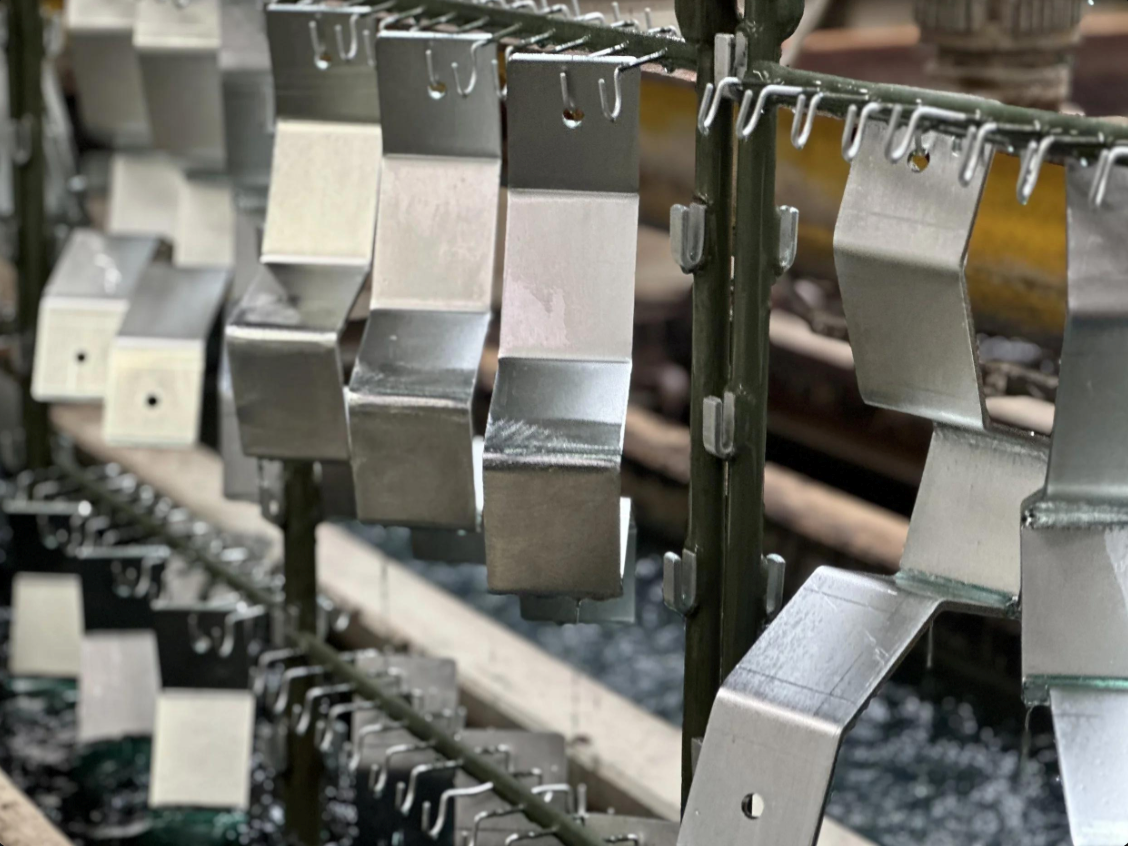
Moisture and water rain, puddles, frequent washing
Salts and agrochemicals fertilizers and crop protection products in rural operation
Dust and abrasive particles dirt roads and rural areas
Extreme heat components near the engine and exhaust system
De-icing salts roads and cities where road salt is used in winter
Under these conditions, a stamped part without the right anticorrosion coating will begin to corrode well before its expected service life.
What Corrosion Problems Does Electrolytic Zinc Coating Solve in Stamped Parts?
Uncoated steel stamped parts are vulnerable to corrosion from the moment they come into contact with ambient moisture. Electrolytic zinc coating addresses this problem efficiently and economically.
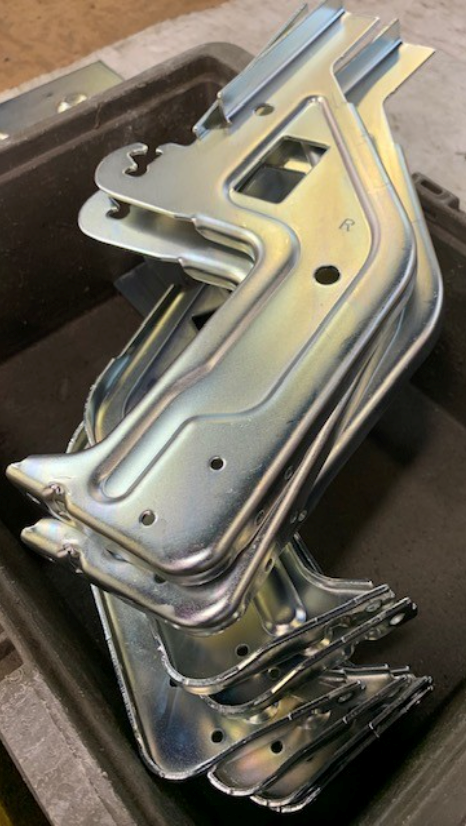
1. Corrosion protection
Electrolytic zinc coating deposits a layer of zinc onto the steel surface, acting simultaneously as a physical barrier and a sacrificial anode — the zinc corrodes preferentially to protect the underlying steel. Depending on the coating thickness and passivation type, it can achieve between 72 and 240 hours of resistance in salt spray testing (ASTM B117).
2. Compatibility with complex geometries
Automotive stamped parts feature edges, bends, holes, and cross-sectional changes that challenge many coating processes. Rack or barrel electrolytic zinc coating covers these geometries in a controlled manner, with process parameters adjusted to ensure coverage across all areas of the part.
3. Uniform surface finish
Electrolytic zinc coating produces a smooth, uniform, and visually appealing finish. In applications where aesthetics matter this finish is a meaningful differentiator.
4. Efficiency for high volumes
The automotive industry produces millions of parts per year. Electrolytic zinc coating is a continuous and highly automatable process, making it ideal for supplying high-volume production lines with tight lead times.
5. Compatibility with different passivation types
Depending on the level of protection required, electrolytic zinc coating for stamped parts can be combined with different passivations:
| Passivation | Color | Approximate Resistance (NSS) |
| Clear | Bluish | 72 hrs |
| Yellow (trivalent) | Iridescent | 96–120 hrs |
| Black | Black | 96–120 hrs |
| Additional sealer | Variable | Up to 240 hrs |
How to Specify Electrolytic Zinc Coating in Stamped Parts: Key Factors
A correct specification of electrolytic zinc coating for automotive stamped parts must consider several factors:
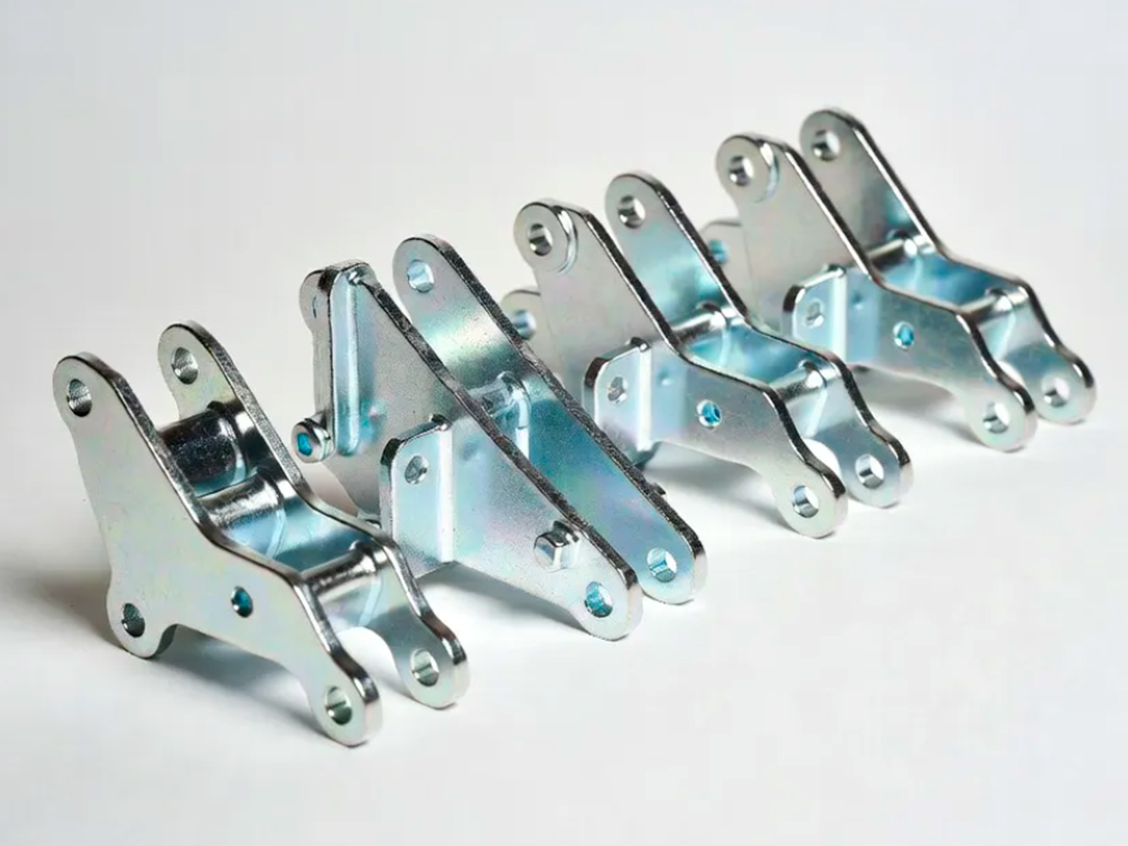
1. Part geometry
Parts with deep cavities, closed edges, or highly complex geometries may have areas of difficult access where zinc thickness is lower. The process — rack or barrel — and bath parameters must be adjusted to match the geometry of each stamped part.
2. Required coating thickness
ASTM B633 establishes different thickness classes for electrolytic zinc coating based on service environment:
| Class | Minimum thickness | Typical environment |
| Fe/Zn 5 | 5 microns | Interior, low exposure |
| Fe/Zn 8 | 8 microns | Moderate exposure |
| Fe/Zn 12 | 12 microns | Severe exposure |
| Fe/Zn 25 | 25 microns | Very severe |
3. Passivation type
Passivation defines the level of additional protection over the zinc layer. In the Argentine automotive industry, OEM specifications from Toyota, Ford, and Volkswagen define the required passivation type based on each part's location in the vehicle.
4. Required corrosion resistance
The operating environment defines the minimum hours of salt spray resistance.
5. Hydrogen embrittlement considerations
In high-hardness stamped parts the electrolytic process can introduce hydrogen into the steel. For these cases, post-plating hydrogen embrittlement relief (de-embrittlement bake) is a critical step that cannot be skipped.
Chousa in the Argentine Automotive Industry
Chousa has over 70 years of experience developing surface treatment solutions for Argentine industry. The automotive sector is one of our longest-standing areas of expertise — from OEM supply chain providers to aftermarket manufacturers.
Do you manufacture stamped parts for the automotive industry and need to evaluate the right electrolytic zinc coating for your application?
Contact our technical team at info@chousa.com.ar we analyze each case to help you specify the coating your part requires.