
In this article:
- What is thread chasing and why does it occur
- Why thread chasing increases the cost of galvanized fasteners
- Where this problem appears in industry
- Zinc flake: the alternative for fasteners
- Hot-dip galvanizing and zinc flake don’t compete — they complement each other
Hot-dip galvanizing is robust, cost-effective, and proven for large structural surfaces.
But when that same specification criterion is applied to fasteners, a problem appears that few anticipate — and whose cost only becomes apparent later.
What is thread chasing and why does it occur
The hot-dip galvanizing process submerges parts in molten zinc at approximately 450°C. The result is a coating between 45 and 85 microns thick. For a beam or a column, that thickness is not a problem.
For a bolt or a nut, it is.
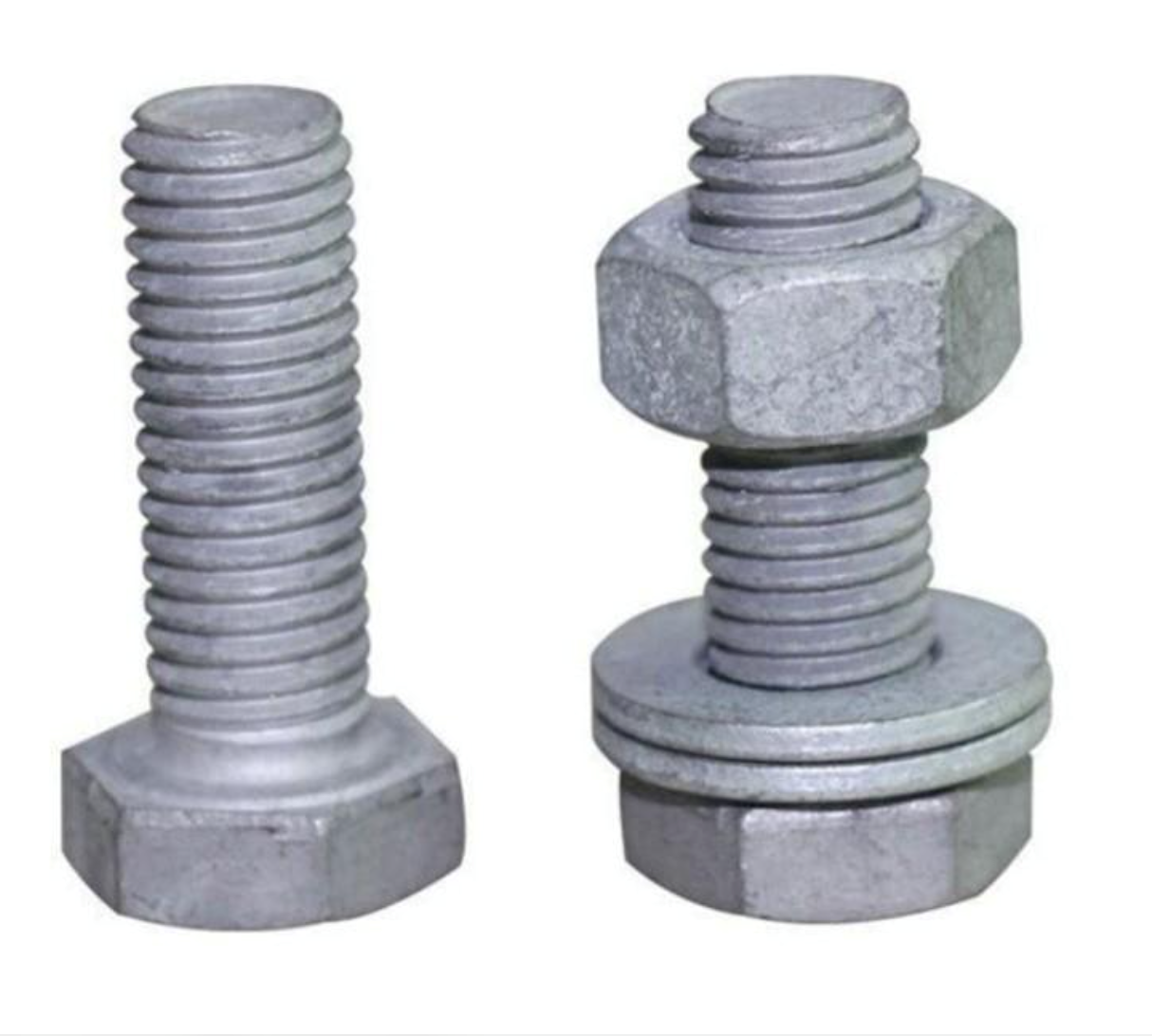
A standard metric thread has dimensional tolerances of between 20 and 30 microns. The hot-dip galvanizing coating practically doubles that margin. The direct consequence: the nut won’t fit. Or it fits with so much friction that assembly becomes impractical.
The solution applied in the plant is thread chasing: running a tap or die to recover the dimensional tolerance and allow assembly.
The problem is what gets lost in that process.
Why thread chasing increases the cost of galvanized fasteners
Thread chasing is not just an additional operation. It is an operation that damages the coating that was just applied.
“When the thread is chased, part of the zinc is removed from the contact zones — exactly where the component will be subjected to the greatest friction, moisture, and load.”
The other alternative used in industry is to manufacture parts with oversized tolerances to account for the galvanizing thickness — but that comes with its own cost: modifying the original dimensions of the bolt can compromise its mechanical properties and behavior under load.
In either case, the costs that accumulate are not always accounted for in the original specification:
- Additional plant operation time
- Thread chasing tools and their maintenance
- Risk of thread damage if chasing is not precise
- Higher in-service failure rate due to uncoated zones or compromised mechanical properties
A part that seemed more economical at the purchasing stage may end up being more expensive over its service life.
Where this problem appears in industry
Thread chasing on galvanized fasteners is common in projects where hot-dip galvanizing is specified for the entire structure:
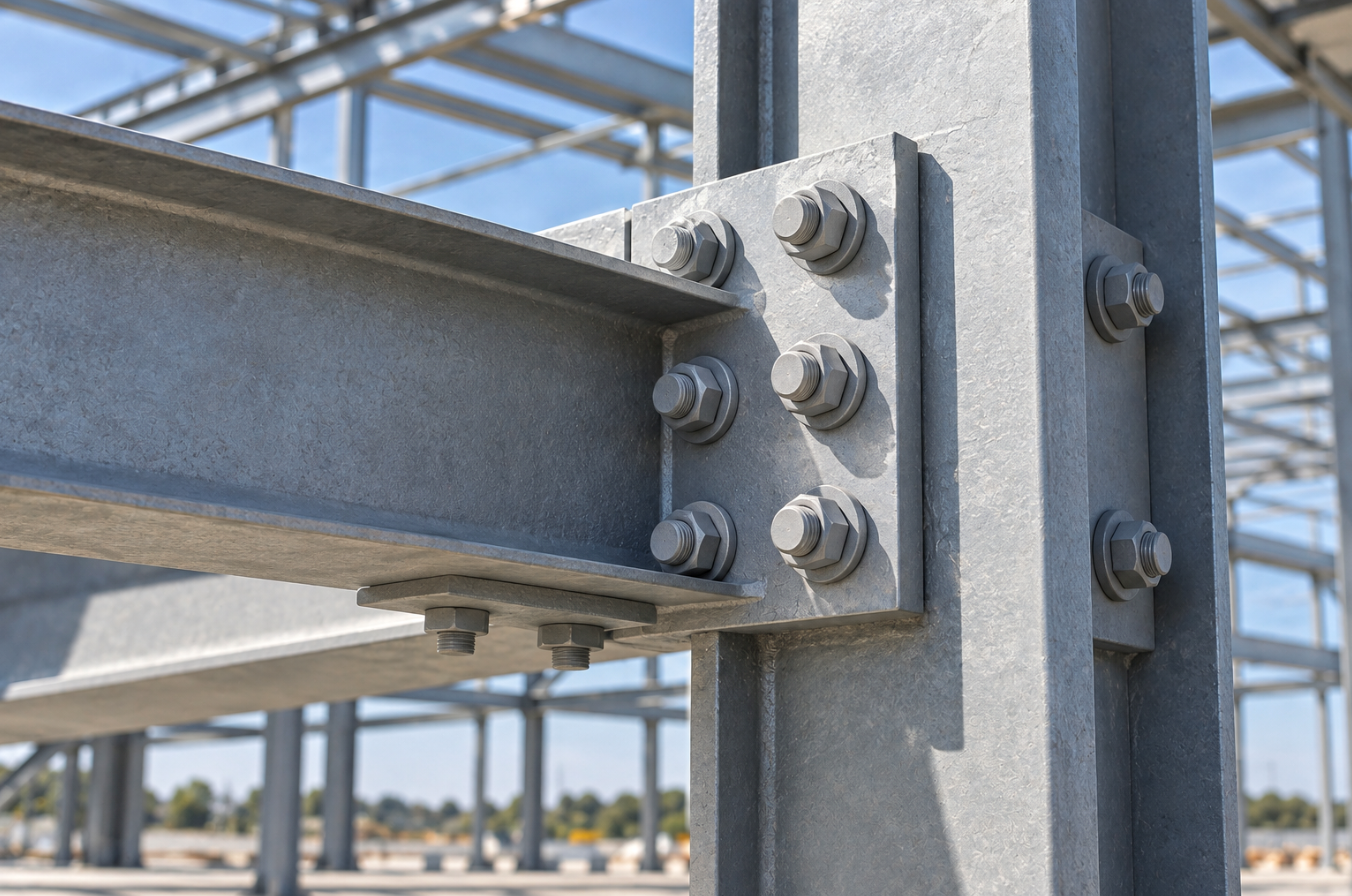
- Metal structures for mining, construction, and oil & gas
- Supports and structures for solar panels
- Electrical transmission towers and transformer hardware
- Road and transport infrastructure
In all these cases, the volume of fasteners is significant. Thread chasing, multiplied across thousands of parts, stops being a minor detail and becomes a process problem with a direct impact on costs and quality.
Zinc flake: the alternative for fasteners
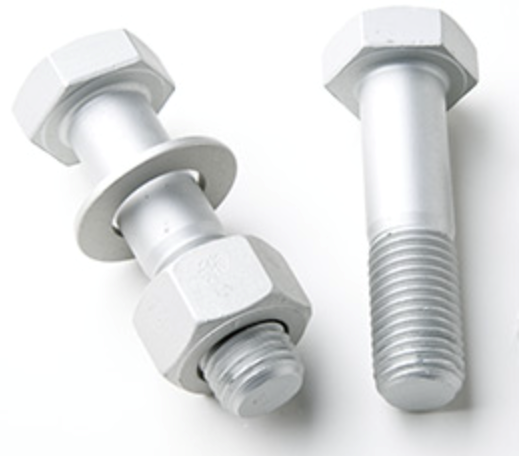
Zinc flake is applied by dip-spin: the part is submerged in the solution and centrifuged to distribute the coating uniformly. The resulting thickness is between 5 and 12 microns — within the dimensional tolerances of any standard thread.
No thread chasing. No coating removal. No unprotected zones from day one.
In terms of corrosion protection, LAURENTCOAT® zinc flake reaches up to 1,000 hours in salt spray testing per ASTM B117 — equal to or greater than hot-dip galvanizing on fastening components.
| Characteristic | Hot-Dip Galvanizing | Zinc flake LAURENTCOAT® |
| Coating thickness | 45–85 microns | 5–12 microns |
| Compatible with thread tolerances | No — requires chasing | Yes — no chasing needed |
| Coating removal during assembly | Yes | No |
| Salt spray resistance (ASTM B117) | 500–700 hrs | Up to 1,000 hrs |
| Recommended application | Structures, profiles, beams | Fasteners, bolts, nuts, hardware |
Hot-dip galvanizing and zinc flake don’t compete — they complement each other
The correct specification is not about choosing one over the other. It’s about understanding what each treatment does well and applying it where it makes sense.
- Hot-dip galvanizing for the structure: beams, columns, profiles
- Zinc flake for fasteners: bolts, nuts, studs, fixing hardware
Each treatment in its place. Complete system protection. No additional operations and no weak points in the final assembly.
In CHOUSA we have over 65 years of experience applying surface treatments for industry. CHOUSA llevamos más de 65 años aplicando tratamientos superficiales para la industria.
If you are specifying fasteners for a galvanized structure and want to evaluate the right treatment, you can contact our technical team at info@chousa.com.ar.