
In this article:
- Export conditions demand more from surface treatments
- Why do planter springs fail?
- From yellow chromate to zinc flake: why agricultural machinery manufacturers are making the switch
- Comparison: Yellow Chromate vs. Zinc Flake LAURENTCOAT®
- Surface treatment as part of the product
The field is unforgiving. The global market, even more so.
A planter stopped in the middle of a growing season is not an inconvenience — it's a loss. Every hour of downtime has a direct cost on the planting window, which for many crops is measured in days.
Argentine agricultural machinery manufacturers are exporting more and more. Eastern Europe, Africa, South America — markets with different climates, demanding operating conditions, and global competition that leaves no room for premature failures.
In that context, the surface treatment of springs has gone from being a technical detail to a product differentiator.
Export conditions demand more from surface treatments
A planter operating in the Argentine field already faces tough conditions. But when that same machine reaches an export market, the demands on every component multiply:
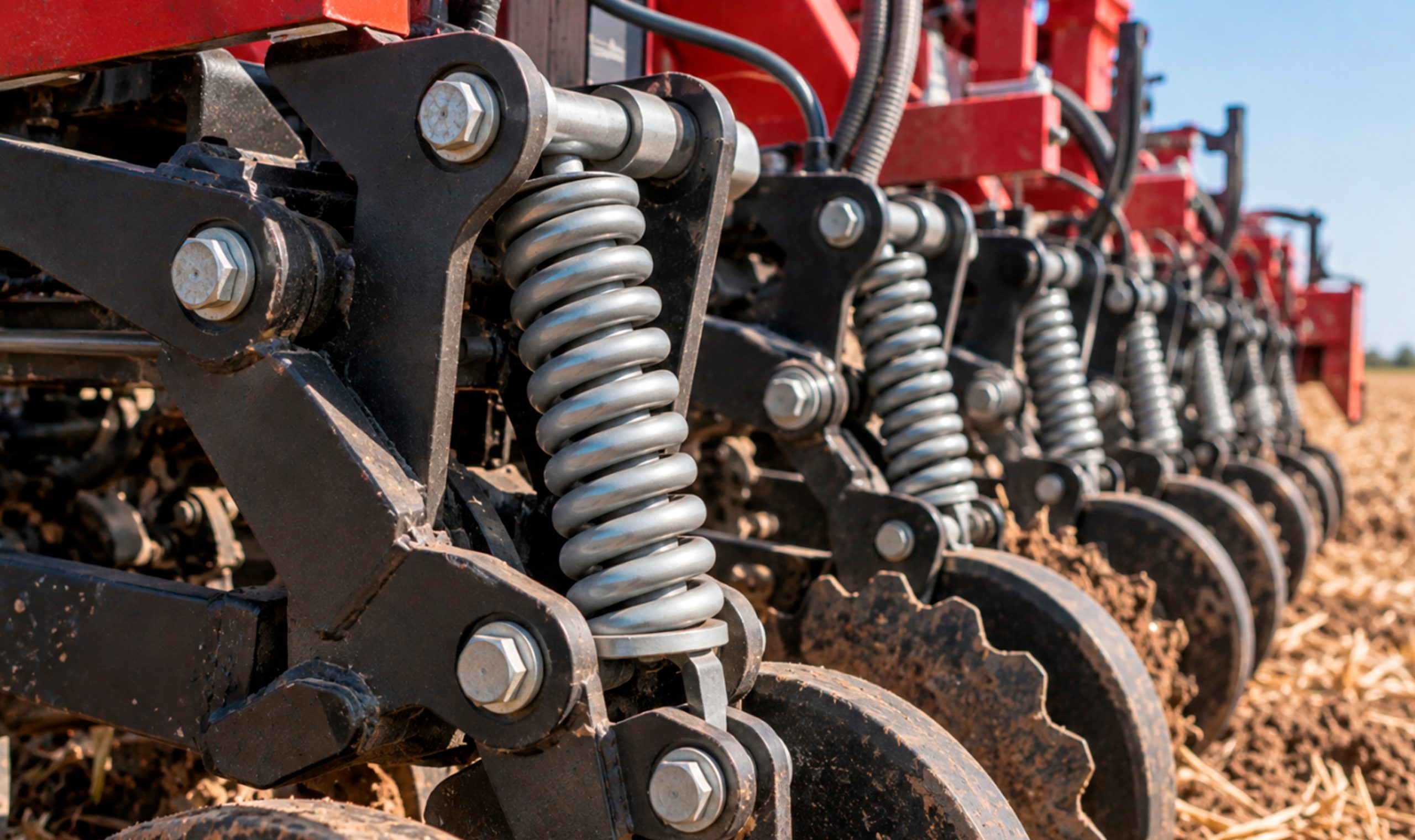
- Higher humidity and extreme temperature cycles
- Soils with higher concentrations of salts or corrosive minerals
- Longer growing seasons with less opportunity for preventive maintenance
- Long-distance maritime transport with exposure to salt moisture and vibrations
A treatment that was sufficient for the local market may not guarantee the same service life on another continent. And a failure in an export market carries a cost that goes far beyond the part itself: brand reputation, warranties, replacement costs.
Why do planter springs fail?
Planter springs operate under constant mechanical stress and permanent environmental exposure: humidity, agrochemicals, abrasion from dust and soil, temperature fluctuations — all at the same time, throughout the entire season.
The most widely used surface treatment today for springs in agricultural machinery is yellow chromate — applied over an electrolytic zinc base. It is a well-known and accessible process, but it has concrete limitations under high-demand conditions.
The 3 main causes of failure:
1. Corrosion resistance limit
Yellow chromate offers moderate protection against corrosion. In environments with high humidity, agrochemicals, or extreme temperature cycles, that protection can be exhausted before the component reaches its expected service life.
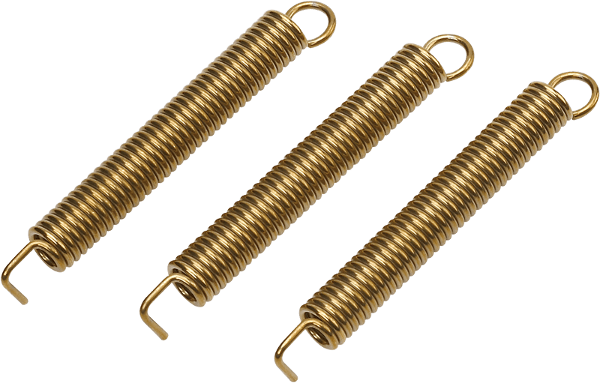
2. Hydrogen embrittlement
Electrolytic zinc plating — the base of yellow chromate — is a process that uses electrical current. During electrolysis, hydrogen is generated that can diffuse into the steel and become trapped in its internal structure.
In high-hardness steels, such as those used in agricultural machinery springs, this absorbed hydrogen reduces the material's ductility and makes it susceptible to fracture under load — even without any visible corrosion. This phenomenon is known as hydrogen embrittlement and can cause the spring to break suddenly and without warning.
To mitigate this risk, treated parts must undergo a de-embrittlement (baking) process: a post-plating thermal treatment aimed at eliminating absorbed hydrogen. However, this additional step implies time, cost, and rigorous process control.
And even when performed correctly, de-embrittlement does not guarantee complete elimination of diffused hydrogen. In very high-hardness steels, the risk of embrittlement may persist — making this process a partial solution to a structural limitation of the electrolytic method.
3. Irregular coverage on complex geometries
Electrolytic zinc plating distributes the coating following the lines of the electric field. In inner coil areas, ends, and contact points of the spring, coverage can be inconsistent — leaving unprotected areas where corrosion attacks first.
From yellow chromate to zinc flake: why agricultural machinery manufacturers are making the switch
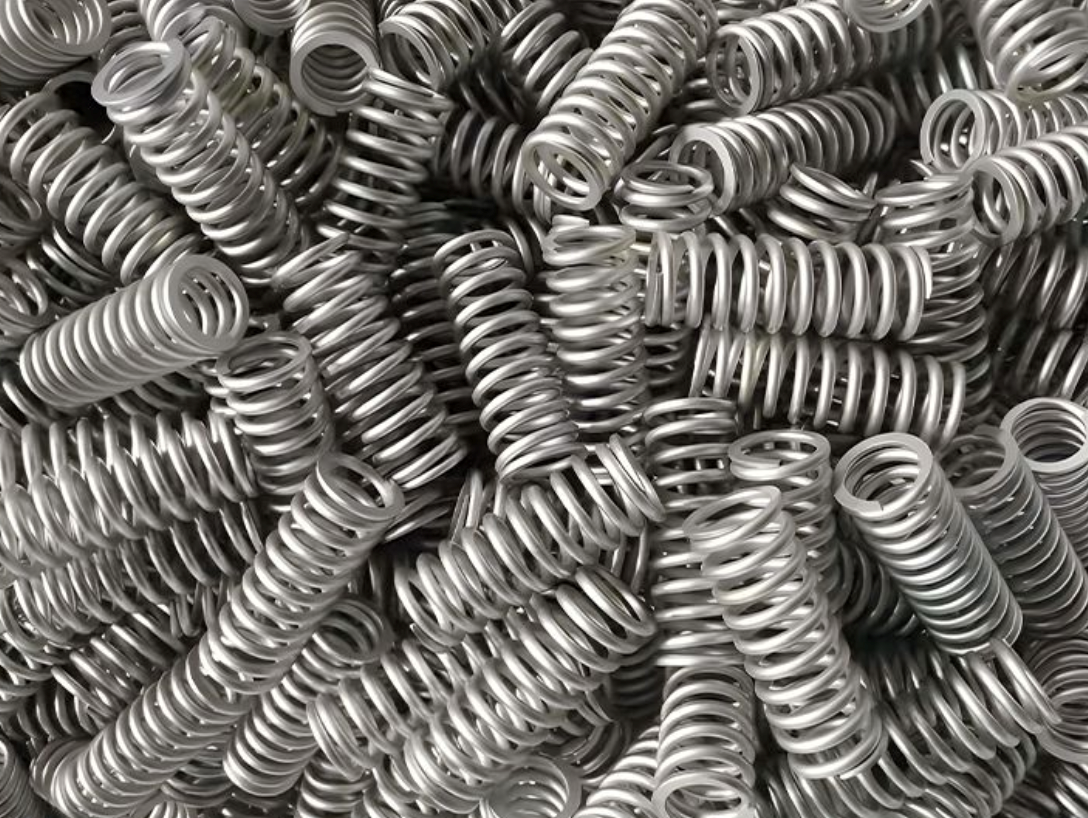
Zinc flake coating — applied through the dip-spin process — offers a higher-performance alternative for springs operating under demanding conditions.
With only 5 to 12 microns of thickness, LAURENTCOAT® achieves up to 1,000 hours of resistance in salt spray testing (ASTM B117) — far above what standard yellow chromate offers. And since it does not use electrical current, it completely eliminates the risk of hydrogen embrittlement.
Comparison: Yellow Chromate vs. Zinc Flake LAURENTCOAT®
| Feature | Yellow Chromate | Zinc flake LAURENTCOAT® |
| Salt spray resistance (ASTM B117) | 96–240 hrs | Up to 1,000 hrs |
| Process with hydrogen embrittlement risk | Yes | No |
| Requires de-embrittlement baking | Yes | No |
| Application on high-strength steels | Limited | Excellent |
For the machinery manufacturer, this translates into:
- Longer component service life in the field
- Lower failure rates in export markets
- Elimination of fracture risk from embrittlement
Surface treatment as part of the product
Argentine agricultural machinery has a real opportunity in global markets. To take advantage of it, every component must be up to that level of competition.
Springs are no exception. Fasteners and fixing elements represent between 1% and 3% of the total manufacturing cost of the machinery — but a failure in those components can shut down the entire operation. Switching from yellow chromate to zinc flake is not an additional cost — it is a decision that directly impacts product reliability, end-customer satisfaction, and the manufacturer's reputation.
Chousa in agricultural machinery
At CHOUSA we have been applying surface treatments for industry for over 65 years. We work with agricultural machinery manufacturers and strategic suppliers on the protection of their components.
Want to evaluate whether zinc flake is the right solution for your planter springs?
You can reach us at info@chousa.com.ar and connect with our technical team.