
In this article:
- What are Allen bolts and their strength classes
- Hydrogen embrittlement in Allen bolts: a factor to consider
- Laurentcoat® zinc flake: anticorrosion coating for high-strength Allen bolts
- Comparative table: electrolytic zinc plating vs zinc flake for Allen bolts
- Factors to evaluate when choosing the right coating
- Industrial applications of high-strength Allen bolts
Allen bolts are fastening elements widely used in industrial applications where mechanical strength, precision and reliability in the joint are required.
Their most recognizable feature is the interior hexagonal socket head, which allows high torque values to be transmitted using an Allen key and facilitates assembly in confined spaces.
These bolts are manufactured in different strength classes — 8.8, 10.9 and 12.9 — and as mechanical strength increases, the correct selection of the anticorrosion coating for Allen bolts becomes increasingly important.
What do classes 8.8, 10.9 and 12.9 mean?
The strength class of a bolt identifies its main mechanical properties:
| CLASS | TENSILE STRENGTH |
| 8.8 | 800 MPa |
| 10.9 | 1.000 MPa |
| 12.9 | 1.200 MPa |
As steel strength increases, other factors that can affect fastener performance must be controlled: corrosion, dimensional tolerances, friction behavior and, especially, the potential risk of hydrogen embrittlement in high-strength Allen bolts.
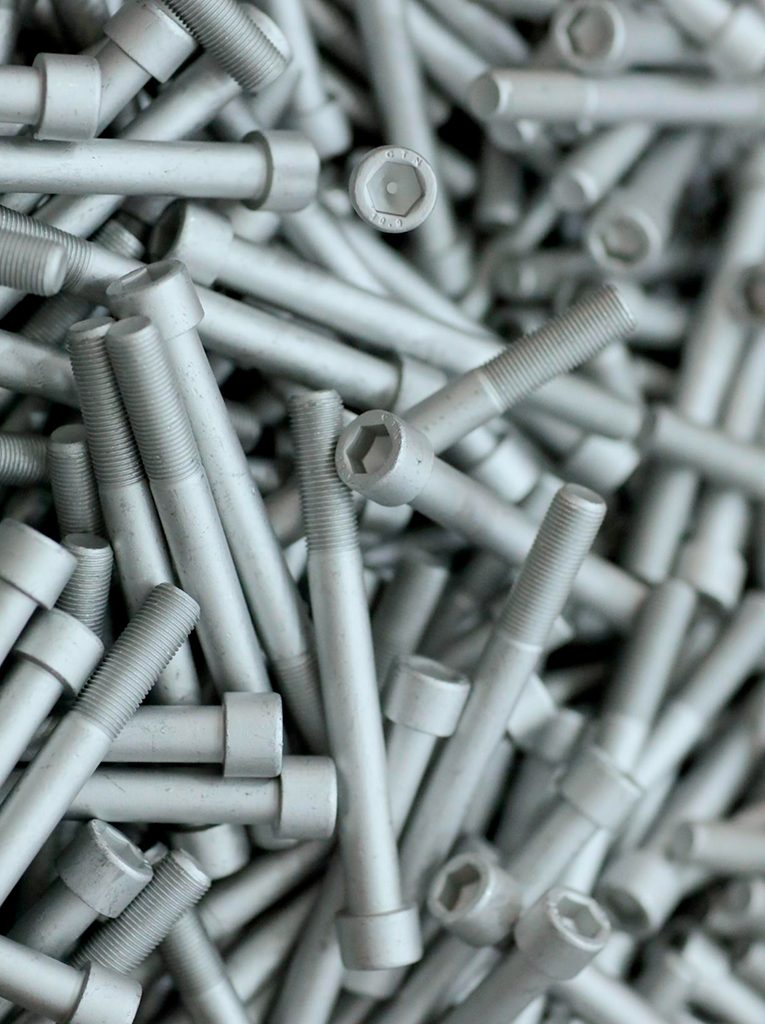
Hydrogen embrittlement in Allen bolts: a factor to consider
Hydrogen embrittlement is a phenomenon that can affect certain high-strength steels when hydrogen atoms enter the microstructure of the material.
One of the particularities of this phenomenon is that the part may initially pass dimensional and visual inspection and yet subsequently show delayed fracture under load.
For this reason, in high-strength Allen bolts — especially in classes 10.9 and 12.9 — the selection and control of the anticorrosion coating become especially important.
In electrolytic treatments, certain stages of the process can introduce hydrogen into the material. This does not mean that electrolytic zinc plating cannot be used on high-strength fasteners. There are specific procedures, process controls and hydrogen bake-out treatments designed to minimize this risk. The decision must be made taking into account the characteristics of the part and the requirements of the application.
Laurentcoat® zinc flake: anticorrosion coating for high-strength Allen bolts
An alternative for certain applications is zinc flake coating.
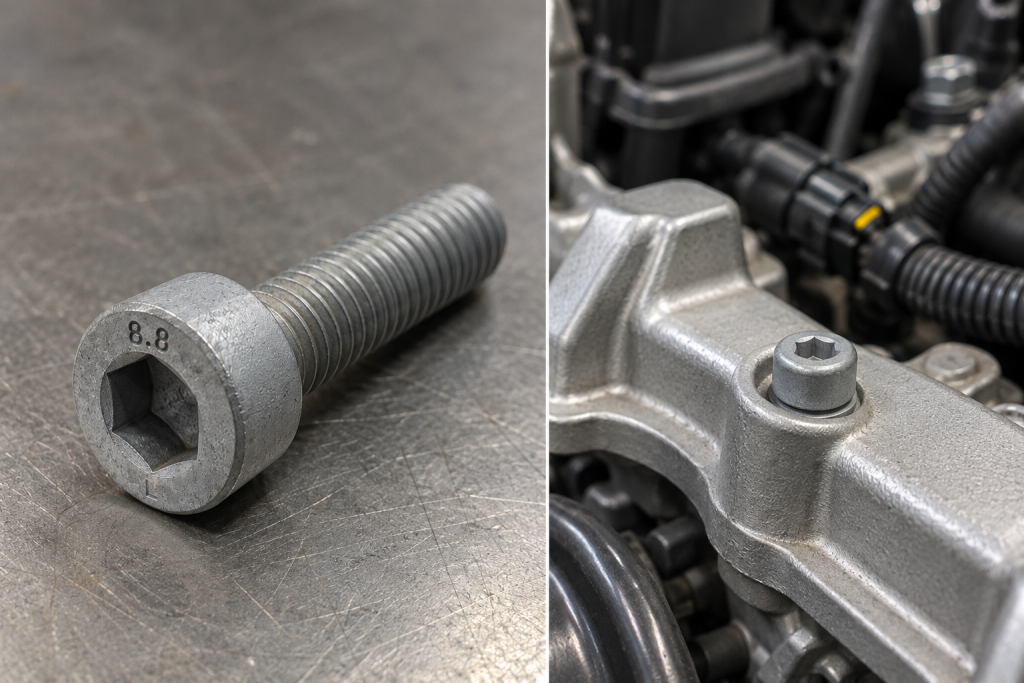
Unlike electrolytic zinc plating, zinc flake is a non-electrolytic process. Laurentcoat® allows high-strength Allen bolts to be protected without introducing hydrogen during the application of the anticorrosion coating.
Laurentcoat® is applied using a dip-spin process and thermal curing, achieving typical thicknesses of 5 to 12 microns and reaching up to 1,000 hours of corrosion resistance in salt spray testing per ASTM B117.
The reduced thickness is especially relevant for Allen bolts because it provides high anticorrosion protection while maintaining the dimensional tolerances of the threads — a critical factor in 10.9 and 12.9 bolts where tolerances are very tight.
Comparative table: electrolytic zinc plating vs zinc flake for Allen bolts
| Criterion | Electrolytic zinc plating | Zinc flake Laurentcoat® |
| Process | Electrolytic | Non-electrolytic |
| Corrosion resistance (NSS) | Up to 96 hrs | Up to 1,000 hrs |
| Hydrogen embrittlement risk | Present — requires bake-out | No risk |
| Dimensional Tolerances | May affect threads | Does not alter tolerances |
| Reference Standards | ASTM B633 | ASTM F1136 / ISO 10683 |
Electrolytic zinc plating or zinc flake for high-strength Allen bolts?
There is no universal anticorrosion coating for all Allen bolts.
Electrolytic zinc plating remains a widely used and efficient solution for numerous industrial applications. Zinc flake, on the other hand, becomes especially relevant when high corrosion resistance requirements are combined with high-strength steels — such as Allen bolts 10.9 and 12.9 — and the need to avoid hydrogen incorporation during the coating process.
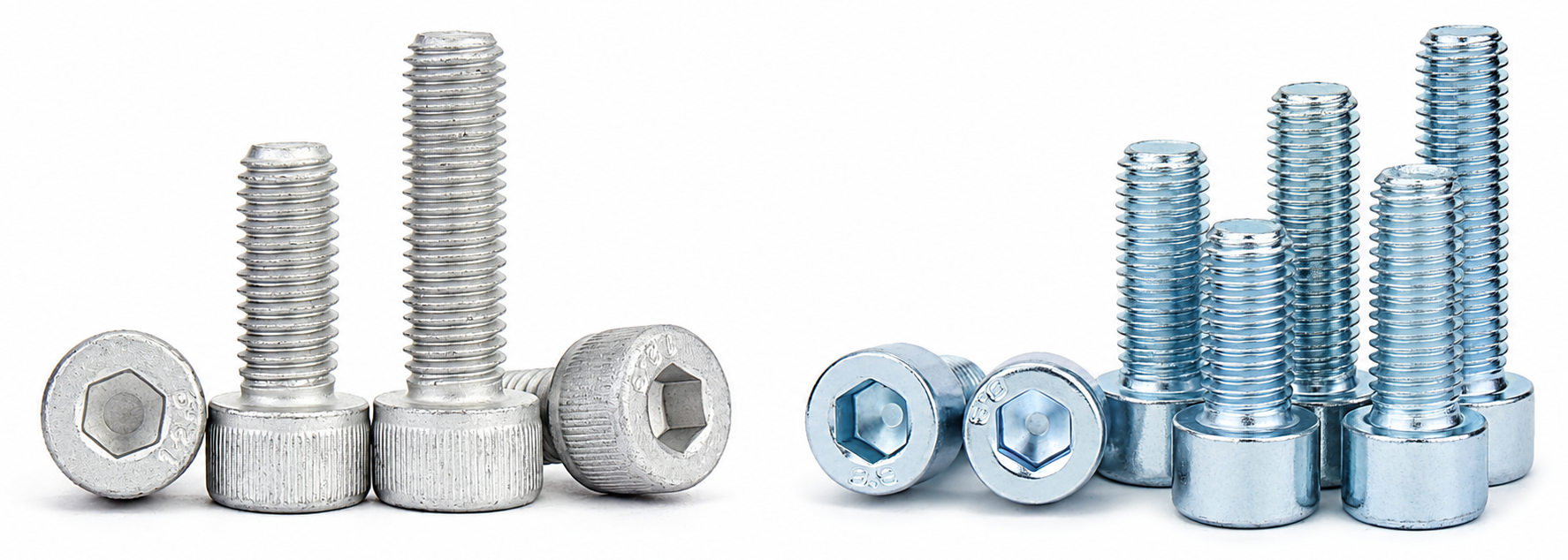
The selection of the anticorrosion coating for Allen bolts should not be made solely based on salt spray hours. The following factors must also be analyzed:
- Bolt strength class and hardness
- Environmental working conditions
- Torque and friction requirements
- Dimensional Tolerances
- Part geometry
- Applicable standards and specifications
Industrial applications of high-strength Allen bolts
High-strength Allen bolts can be found in a wide variety of sectors, including agricultural machinery, automotive, mining, Oil & Gas, structures and industrial equipment.
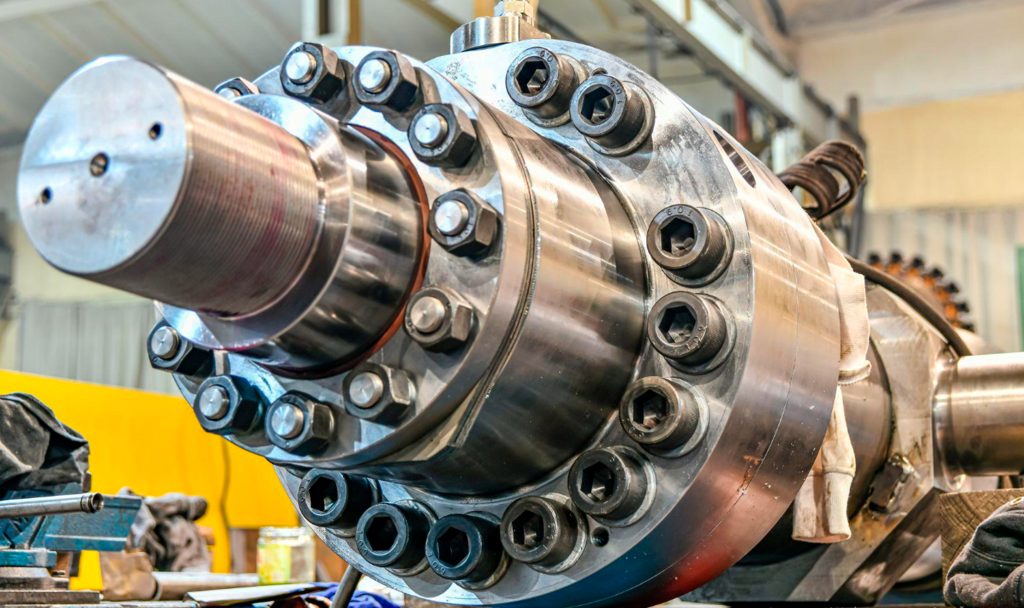
Operating conditions can vary greatly between applications. Therefore, even using the same type of Allen bolt, the appropriate anticorrosion coating may change depending on the environment where the part will operate.
At Chousa we work with different surface protection technologies, including electrolytic zinc plating, zinc-nickel and Laurentcoat® zinc flake, evaluating each application to determine the most suitable alternative. Because the goal is not simply to protect an Allen bolt against corrosion, but to ensure that the anticorrosion coating supports the performance for which the part was designed.
Do you work with high-strength Allen bolts and need to evaluate the correct anticorrosion coating for your application?
You can contact us at info@chousa.com.ar and connect with our technical team.